Sign Up for E-mail Updates

Please fill in the information below if you would like us to notify you when new blogs are posted.

Topics of interest to you!

Are you a...: *


3-Point Products' Healthcare Blog

Current Articles | RSS Feed RSS Feed

How to Prevent Carpal Tunnel Syndrome (CTS) or Minimize Wrist Pain

  | Share on Twitter Twitter | Share on Facebook Facebook | Buzz This  Google Buzz | Submit to Digg digg it |  Add to delicious  delicious |  Submit to StumbleUpon StumbleUpon |  Share on LinkedIn LinkedIn | Submit to Reddit reddit 

First of all it is helpful to understand what the problem is in order to avoid doing things that might cause it.  Carpal tunnel syndrome is a disorder that occurs when the median nerve at your wrist becomes compressed.  The typical symptoms of the disorder include numbness in the thumb, index and middle fingers and in half of the ring finger.  You may also experience pain and eventual weakness of the hand with this disorder.  

If the nerve is compressed long term permanent nerve damage can occur. This sounds bleak but the good news is that if it is detected early it often responds to non-surgical intervention.  If you spend a lot of time doing repetitive or forceful activities you are at increased risk for carpal tunnel syndrome.  We are not just talking about working on an assembly line but about knitting, driving, biking, playing piano, gardening, writing and keyboarding. You are also at a greater risk if you are overweight, have diabetes, are small framed and if you smoke. 

Some simple changes in your lifestyle can reduce your risk.  It is important to maintain a healthy weight, exercise, manage any health problems such as diabetes, and avoid smoking.

Next it is important to maintain proper body mechanics.  What does this mean?  This means avoiding tight gripping and pinching and limiting repetitive flexion and extension of the wrist.  So keeping the wrist at neutral (straight) is going to prevent the nerve from being compressed. 

Here is a list of some simple work/home adjustments that can be made to help prevent or remediate symptoms:

  1. If you do repetitive work, take short breaks every hour to relax the muscles and reduce stress to the arm
  2. Sit up straight, keep your neck at neutral, shoulders back and wrists straight when working at a keyboard as this will keep the nerve aligned all the way down the upper extremity.
  3. Exercise or take stretch breaks before during and after doing repetitive or forceful work/activities.  Exercise can be as simple as opening and closing the hand gently.
  4. Splint use during the day may be needed if you have trouble remembering to keep the wrist straight and at night is helpful when you can’t avoid curling the wrist in.  This is typically only indicated if you are already having symptoms and have been diagnosed with the disorder, as splints can contribute to weakness of forearm muscles.
  5. Massaging theo wrist/hand is often helpful - especially when it is done by somebody else - to allow your hands to rest and recover.
  6. Ice can be used if you are already exhibiting pain and inflammation.
  7. Enlarge the grip or pinch surface when you can.
  8. Drinking 8-10 glasses of water a day

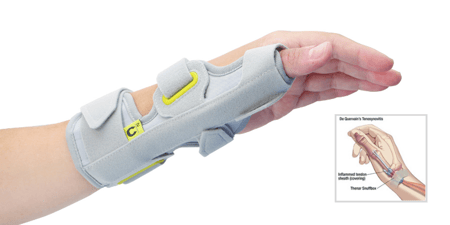
Wrist Control splint to align the wrist and prevent carpal tunnel syndrome

Here are some simple modification ideas that will help you to think about changes you can make to prevent CTS before it occurs or to reduce the pain once you have carpal tunnel syndrome. Make some of the following modifications in how to do or hold things (left image is how NOT to do things, right image shows proper technique):


Proper support and hand positioning will help prevent carpal tunnel pain and wrist strain.

Proper wrist position will help alleviate carpal tunnel pain and wrist pain.


Proper wrist positions will help prevent carpal tunnel pain and wrist pain.


It is important to understand the disease and how it may occur in order to prevent it.  Do not wait if you notice symptoms.  Early and proper diagnosis and treatment are critical to success.  Waiting until you have constant pain and numbness will result in less than favorable results.  Also remember the symptoms of carpal tunnel syndrome can mimic many other disorders so again: early and definitive diagnosis is critical.


For a more detailed understanding and prevention program you can view our online streaming video or DVD on carpal tunnel. CLICK here: 

http://www.liveconferences.com/product.asp?cid=38


We hope you have enjoyed reading this article written by:

Susan Weiss OTR/L CHT and Nancy Falkenstein OTR/L CHT

Exploring Hand Therapy

www.handtherapy.com


Ergonomic Products for Gardening & Golf: Suitable for Arthritis Pain

  | Share on Twitter Twitter | Share on Facebook Facebook | Buzz This  Google Buzz | Submit to Digg digg it |  Add to delicious  delicious |  Submit to StumbleUpon StumbleUpon |  Share on LinkedIn LinkedIn | Submit to Reddit reddit 

Julie Belkin, President of 3-Point Products was invited to speak about “Summer and Arthritis” on the WBAL-TV (Baltimore’s channel 11) morning news show on Sunday August 1st. Ms. Belkin and newscaster Sarah Caldwell talked about how the changes in the barometric pressure that are more severe in the hot summer months, can affect how your joints feel, especially if you have arthritis.

Julie demonstrated products for summer activities including golf and gardening. These products can be found at the following web links:

Radius Transplanter ergonomic garden tool for easy use arthritis blog resized 600

Ergonomic Garden Tools by Radius Garden

Peta easy-grip® Garden Tools: this is a UK site that also offers ergonomic scissors and kitchen tools

HandHelpers.com offers a variety of hand-friendly products

PowerGear® Pruners by Fiskars® (the one shown during the interview was the Large Bypass Pruner)


Terris Golf® "Competition Series" golf gloves

Bionic: full line of gloves for golf, tennis, equestrian, baseball, gardening….

www.cuttersgloves.com: The Naked Glove is easy to put on because the palm is open, which also minimizes sweating; the Training Glove is is a glove withour finger tips

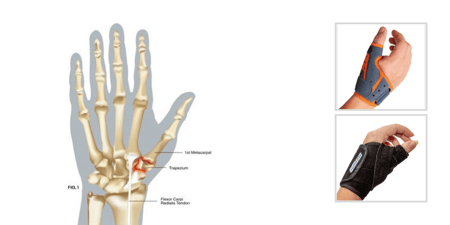
 Thumb splint to reduce thumb arthritis pain

Products from 3-Point, including the 3pp™ ThumSling™ that Julie was wearing for her own thumb arthritis, are described on this web site. The links below will take you directly to the pages where these products are described in more detail:

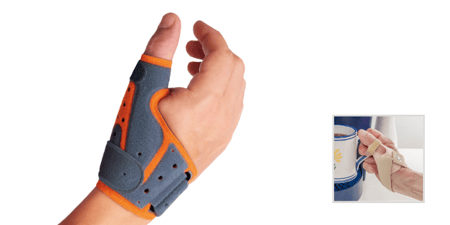
3pp™ ThumSling™ for thumb arthritis support when gardening, playing golf or tennis

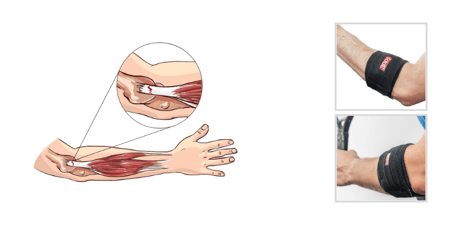
3pp™ Elbow Wrap for tennis elbow or golfer’s elbow

3pp™ Carpal Lift™ for bicycling

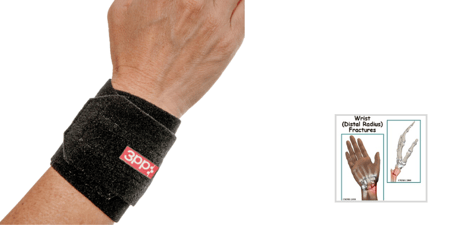
3pp™ Wrist Wrap™ for tennis, golf and gardening among other activities

There are many other products that can improve function and reduce arthritis pain so check back often to see what is new on the blog. You can even sign up to receive notifications when a new blog is uploaded using the form on the left.

If you like this information, let us know by posting a comment.


Wrist Pain from TFCC Injuries or Tears

  | Share on Twitter Twitter | Share on Facebook Facebook | Buzz This  Google Buzz | Submit to Digg digg it |  Add to delicious  delicious |  Submit to StumbleUpon StumbleUpon |  Share on LinkedIn LinkedIn | Submit to Reddit reddit 

The Triangular Fibrocartilage Complex (TFCC) is a group of ligaments and cartilage on the ulnar (little finger side) of the hand. Cartilage is a firm rubbery tissue that cushions the bones. The TFCC ligaments attach the cartilage to the small wrist bones which also suspend the ends of the two forearm bones, the ulna (on the little finger side of the forearm) and the radius (on the thumb side).

The most common symptoms of a TFCC problem are wrist pain on the little finger side of the wrist with a clicking or popping sound when moving the wrist or rotating the forearm. Wrist pain is generally felt when gripping tightly or when pushing on the hand to raise up from a chair.

TFCC problems can be caused by a fall on an outstretched hand (a "FOOSH") or simply degeneration from overuse and the aging process. Athletes, particularly gymnasts who weight bare on their hands, are prone to TFCC problems.

Treatment for a TFCC problem includes splinting the wrist for a period of time to reduce symptoms followed by a program of range of motion exercises to restore motion and strengthening. Initial splinting for rest includes an immobilizing wrist splint. A splint that is trimmed to allow the fingers to move freely makes it easier to wear without having to remove it for daily activities. Splints with D-ring straps that secure the splint firmly are also recommended.

There are only a few splints designed specifically to address TFCC problems.  The 3pp Carpal Lift supports the ulnar carpal bones to realign the wrist and relieve stress on the TFCC.  A pad cushions the palm of the hand and two straps lift the carpal bones into place. This splint can be worn during activity and is recommended for incomplete tears to allow healing and when surgery is not needed or is delayed. Another splint is called the Wrist Widget and it attempts to relieve the problem by strapping the ends of the forearm bones together to prevent the displacement caused by a TFCC tear.

TFCC problems can be very persistent and rarely go away by themselves. An orthopedic surgeon who specializes in hand and wrist problems can diagnose the condition and direct a proper treatment program.

Author: Julie Belkin


All Posts