Posted on Tue, Feb 19, 2013 @ 12:45 PM
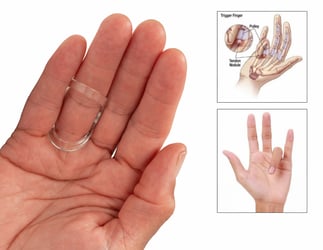
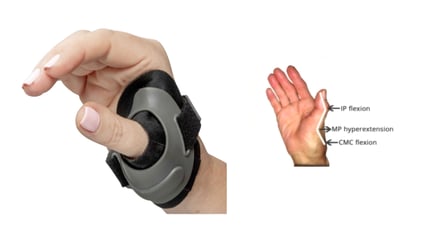
The following video shows what a Trigger Finger is and how an Oval-8 Finger Splint can help. It includes graphics and fitting tips.
If you would like to learn more about Oval-8 splints, please visit our Oval-8 page.
We appreciate hearing from you. Feel free to share your thoughts about this video in the comments section below.
Also: If you found this helpful, remember to sign up to be notified of future blog entries.
Posted on Thu, Oct 04, 2012 @ 08:29 AM
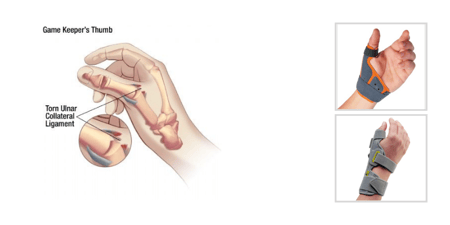
There are many types of thumb splints on the market today that offer different levels of support for different conditions. You may need a thumb splint to relieve the pain from
arthritis or
tendinitis, to rest a
sprain or protect a
fracture. This video discusses what style and what level of support you may need for your particular condition.
Learn more on how to choose the best splint for you on our “
Choosing a Splint” page.
More information on 3-Point Products line of Thumb Splints
Posted on Wed, Sep 26, 2012 @ 03:02 PM
The key to success with Oval-8 splints is a precise, secure fit. Until now, choosing the proper size has required a fitting session with a health care professional or visiting a jeweler to be sized with a ring sizer.
Now, using the
Oval-8 Sizing Guide, you can determine a range of sizes certain to provide an optimal fit no matter the condition of your finger. Full step-by-step instructions are included to guide you through the process of determining the size or sizes you will need.
Click here for the Oval-8 Sizing Guide
Posted on Mon, Sep 24, 2012 @ 08:28 AM
Arthritis is a disease that causes joint pain, stiffness and swelling. The joint pain of arthritis can appear as knee pain, hip pain, thumb pain, hand pain, or wrist pain, as well as joint pain in other areas of the body.
Many with arthritis claim to experience more arthritis-related pain on colder, wet days than on warmer, dry days. You probably have a relative in your family who will declare “My shoulder is achy. Rain’s coming soon.” And often that relative is correct. There is no conclusive scientific data that weather exacerbates symptoms of arthritis although there could be a link between low barometric pressure, high humidity and joint swelling. This swelling causes stiffness of the joints, as well as pain. Cold weather stiffens muscles, which can be a contributing factor. It should be noted that only symptoms of pain in joints and stiffness seem to be affected by weather and there is no evidence that it leads to joint damage.
How we react to cold weather
When it is cold outside, people tend to be more guarded. We clench up our fists and arms, we hunker down in our seats, burrow into our coats and generally, tighten up our bodies to shield ourselves from the elements. These defensive postures can cause more joint pain and stiffness.
But more importantly, people tend to exercise less in the colder months. Sometimes a lot less. It’s well-known that exercise eases the pain associated with arthritis. It increases flexibility, eases our joints, makes us stronger and improves our overall health. When it’s cold or wet out, we tend to make exercise less of a priority, often ignoring it altogether. Shorter daylight hours in the winter months also limits outside exercise time.
What can you do?
When venturing outside it’s important to dress warmly, using layers to trap heat close to your body. Be sure to cover your head, hands and feet well because we tend to lose most of our body heat from those areas. Make sure to always wear appropriate footwear for the weather to avoid nasty falls on the ice or wet, soggy feet while walking through the rain or the snow.
When the weather prohibits adequate outdoor activities, turn inward and figure out how to exercise inside. It’s key to maintain an active lifestyle throughout the year. If you are in the midst of a flare up, do what you can because it’s worse to not do anything at all. Check your local area for mall walkers programs, yoga classes, or aqua fitness classes at a nearby heated indoor pool.
Look around your house or apartment and make the best use of your indoor space. Exercise by walking around your house during the commercials in your favorite television show, jog in place with light hand weights, take the stairs when you can and maybe borrow or invest in a stationary exercise bike or a treadmill.
Be sure to stay well hydrated by drinking plenty of water and juice. This will help flush out toxins and help alleviate joint pain. Indulge in hot beverages, such as hot tea, hot chocolate and soup. All are warming and comforting on a raw winter day.
You can use a dehumidifier to maintain moisture level at work or home. Start your day with a hot shower. A hot shower can work some of the stiffness out of the joints and warms up your whole body.
Talk to your health care professional about other treatments like over-the-counter anti-inflammatories, supplements, acupuncture, massage, and splints that can be helpful.
Posted on Wed, Sep 19, 2012 @ 08:40 AM
Though the angled band of the Oval-8 Finger Splint design allows each Oval-8 to fit two sizes, occasionally they may need to be adjusted to fine tune the size or alter the angle or length. The splints are made of an injection molded plastic (they are latex-free) and this is not something that can be done with a hairdryer. Adjusting Oval-8 splints should be done by your health care provider or medical equipment supplier and this video details how to adjust Oval-8 splints for a custom fit.
To learn more about
Oval-8 finger splints and what conditions they treat, please click
here.More information on the
Precision Spot Heat Gun.
Posted on Mon, Sep 17, 2012 @ 08:23 AM
What is Ehlers-Danlos Syndrome Hypermobility Type III?Sometimes called Type III, Ehlers-Danlos Syndrome (EDS) hypermobility is the most common type of EDS and it affects about 1 in 10,000 to 15,000 people worldwide. People with this disorder have problems with collagen, a protein that adds strength and elasticity to connective tissue, resulting in loose skin, joints, muscles and ligaments.
It equally affects men and women and people of all racial/ethnic backgrounds.
How did I get Ehlers-Danlos Syndrome hypermobility?EDS hypermobility type III is an inherited connective tissue disorder. Diagnosis is based on clinical evaluation and family history.
What are the symptoms of EDS hypermobility?Do you know someone who is ‘double-jointed’ or extremely flexible? Have you ever been to a stage show, such as Cirque de Soleil, and marveled at the contortionists? Chances are good they may have EDS hypermobility. Some examples of hypermobility are shown below:

Picture credit:
http://lajendi.typepad.com/lajendi/2009/09/joint-hypermobility-aka-doublejointed.htmlThe main symptom of EDS hypermobility is loose joints. It can affect large joints, such as knees and elbows, as well as small joints in the fingers and toes. Dislocated joints are very common and can happen over and over again. Chronic joint and limb pain is also common. Skin is hyper-extensible, meaning that it can be stretched to a greater than usual degree, and can be easily torn or damaged. Skin may have a smooth or velvety appearance and frequent bruising occurs, but can vary in severity.
How can I treat Ehlers-Danlos hypermobility?There is no cure for EDS hypermobility. If you are diagnosed with this disorder, your health care professionals will work together to manage the symptoms and any complications. Physical therapy is usually employed to help strengthen muscles and analgesics are administered to help manage pain. Special precautions should be taken to prevent injuries, such as padded clothing for children. In some cases, surgical repair of the joints may be necessary.
Braces and splints are used to provide stability to hypermobile joints. Knee braces, ankle splints, wrist and arm splints, as well as finger splints are commonly used. Ring splints are ideal for stabilizing finger joints to improve strength and function while preventing excessive motion. Some people will opt for metal ring splints, such as
Silver Ring Splints, for a custom splinting solution. They work well and give the appearance of jewelry, thus minimizing any embarrassment the wearer might feel. Silver ring splints can be costly depending on the style and especially if needed for multiple fingers.

Siris EDS Splint designed to correct hyperextension at the MP joint
(
http://www.silverringsplint.com/our-splints/siris-eds-splint/)
Oval-8® finger splints are molded out of high temperature plastic and are an affordable over-the-counter option, especially for growing children or for people who tend to lose splints easily. People with EDS hypermobility have skin that can be easily damaged. Oval-8’s are an ideal choice because they are low profile and seamless, as well as light weight and comfortable. There is no need for tape or straps and they can be worn long-term.
If you think that a ring style splint might be beneficial, you may want to try an Oval-8 splint first before taking on the expense of metal ring splints. Having both may be useful so you have the Oval-8 splints when doing activities such as gardening or sports where you may be more likely to lose a splint and keep your metal splints for those occasions when ‘jewelry’ is more appropriate.

Oval-8 finger splint used to treat PIP hyperextension.
For more information on EDS hypermobility, click here.
If you found this information helpful, click one of the “like” buttons or sign up for free notification of future blog updates. Or, feel free to leave a comment below. We’d love to hear from you.
Posted on Thu, Sep 13, 2012 @ 08:23 AM
Oval-8's treat a variety of finger conditions, including the most common finger injury -
mallet finger. The Oval-8s will hold the DIP straight or if needed, they can be adjusted using the
Precision Spot heat gun to hold the DIP in slight hyperextension. The open design keeps the skin clean and dry and generally no tape or strapping is needed to hold them in place. The wearer can shower or wash their hands with the Oval-8 on without having to replace straps or tape. This leads to better compliance and better treatment results.
This video details how to use an Oval-8 to treat a mallet finger and also explains how to use silicone gel sheeting as a cushion if the wearer cannot tolerate the pressure on the dorsum (top) of the DIP joint.
Related Blog Posts:The Most Common Finger Injury: Mallet FingerWhat is a Mallet Finger and How is it Treated?How are Oval-8 finger splints used?Frequently Asked Questions:Treating Mallet Finger with Oval-8 finger splintsMore information on Oval-8's
Posted on Mon, Sep 10, 2012 @ 08:17 AM
Oval-8 Finger Splints make treating a variety of finger conditions including Arthritis, Swan Neck Deformity or Trigger Finger comfortable and affordable. These easy-to-wear splints rely on a basic orthopedic principle - that it takes three points of pressure to stabilize or immobilize a joint. Employing this principle in the design, each Oval-8 splint treats a variety of conditions with a simple turn of the splint. And, Oval-8 splints have size adjustability designed right in to accomodate changes in swelling or temperature.
Oval-8 splints can be used to treat the following conditions and problems:

Below are the most common finger conditions treated with an Oval-8:
- Mallet or Baseball finger is the most common finger injury and is best treated by immobilizing the finger in a straight position full time for 4 to 6 weeks. Use an Oval-8 splint on the DIP joint (the end joint) to hold it in extension while still allowing the middle joint (PIP) to bend.
- Swan Neck Deformity is one of the most common deformities caused by Rheumatoid Arthritis. Oval-8 finger splints block the hyperextension at the PIP (middle) joint but still allow the finger to bend for full hand function.
- Jammed fingers are one of the most common injuries and are generally rested in full extension (straight). Use one or two Oval-8 finger splints to hold the PIP (middle) joint in extension.
- Trigger Finger is a common overuse condition. Those with Trigger Finger experience a clicking or locking of the fingers when attempting to straighten them from a fisted position. Oval-8 finger splints reduce triggering by limiting finger flexion thus allowing the tendon the chance to rest and heal.
- Boutonniere Deformity is often caused by a jamming or crush injury. In severe cases the middle finger bone tears through the tendon on the top of the finger known as the central slip. This tear causes the middle joint (PIP) to be stuck in flexion (bent towards the palm) and the end joint (DIP) bends backwards (hyperextends). Wearing one or two Oval-8 splints on the PIP joint holds it straight and still allows the DIP joint to bend.
- A fracture is any break in the continuity of a bone. The most common finger fractures are usually the result of a crushing injury or a fall. Use one or two Oval-8 finger splints to immobilize and protect the finger.
- Osteoarthritis can cause crooked (or deviated) fingers in the small joints of the fingers. An Oval-8 worn on the side of the joint can help straighten them and may prevent further deformity.
In addition to the common finger conditions listed above, Oval-8 finger splints can be used to treat the symptoms of other problems associated with arthritis, stroke, Cerebral Palsy and more, such as:
- When experiencing a flare up of arthritis, an Oval-8 splint to help rest the joint(s) and reduce the effects of inflammation.
- Provide stability for hypermobile joints for those with Ehlers Danlos Syndrome or other collagen disorders.
- Use an Oval-8 f inger splint to improve positioning and prevent contractures for those with mild to moderate spasticity caused by stroke or cerebral palsy.
- Improve finger posture in children learning how to properly hold writing utensils.
Below are links to more information about Oval-8 finger splints:
Oval-8 Finger Splints
Oval-8 Sizing Guide
How to treat a mallet finger with an Oval-8
Oval-8 FAQ's
Also check out our "Videos" page for additional information on how to size and modify Oval-8 splints.
We'd love to hear from you so please leave a comment below.
Posted on Tue, Sep 04, 2012 @ 08:29 AM
3-Point Products is proud to be an exhibitor at the American Society for Surgery of the Hand (ASSH) Annual Meeting in Chicago from September 6 through September 8, 2012. We will be located in Booth 415 and will display and demonstrate our line of hand splints; including the Oval-8 finger splint that treats 6 different common finger conditions, among them arthritis, trigger finger, and mallet finger.

Meetings are our chance to share new products and new ways to use old favorites. For example, adding a strip of our Gel Mate® silicone gel over the DIP when using an Oval-8 splint to treat Mallet Finger provides a solution when the wearer cannot tolerate pressure on the top of the DIP joint. Click here for more information about treating mallet finger with an Oval-8 and Gel Mate.

(Oval-8 and Gel Mate used together to treat a mallet finger)
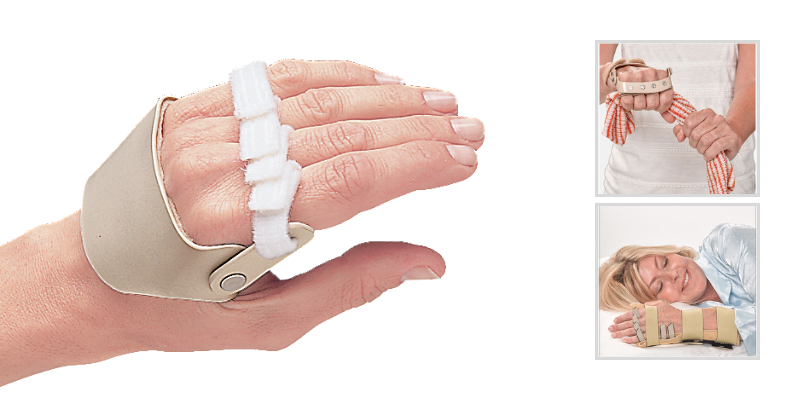
3-Point will be showcasing our new line of NP splints. These splints feature more stretch resistant, breathable foam-lined material, along with updated designs. The new 3pp ThumSling NP features greater length at the wrist and – combined with the classic ThumSling wrap-around strap - provides a greater level of CMC support to reduce pain from CMC Joint Arthritis or Tendinitis. More information on ThumSling NP.

(3pp ThumSling NP)
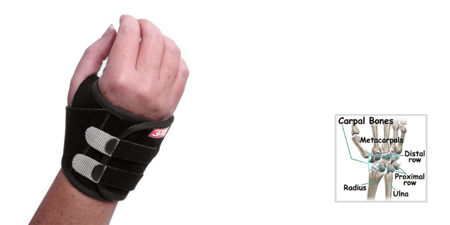
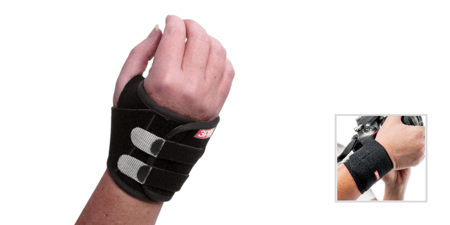
Another splint in the NP line, the 3pp Wrist Wrap NP, provides the same great adjustable compression with the next level of support. The stretch resistant material conforms without bulk. This is a heavier use splint compared to the standard 3pp Wrist Wrap and is ideal to support sprains and ligament injuries during heavy-duty activity. More information on Wrist Wrap NP.

(3pp Wrist Wrap NP)
In addition, 3-Point Products will have our full complement of finger splints, arthritis splints, thumb splints and wrist splints on display at the show. If you are attending the show, please stop by Booth 415 for a demonstration and to learn more.
Visit our website at www.3pointproducts.com for more information.
Posted on Wed, Aug 22, 2012 @ 08:27 AM
Boutonniere Deformity describes a finger deformity
where the finger is bent down or flexed, at the middle joint and bent back or hyperextended, at the end joint.
How did I get a Boutonniere Deformity?When a finger sustains a jamming or crushing injury, the middle finger bone can tear through the central slip (the tendon that straightens your finger), leaving a hole that the bone can extend through (see image above). This causes the tendons and ligaments that normally work to straighten the PIP joint to now bend it instead. It can also develop as a result of rheumatoid arthritis or other inflammatory disorder, or from a cut on the back of the finger.
How can I treat a Boutonniere Deformity?Immediate Treatment
- Apply ice or a cold compress to reduce swelling.
- Wash out any cuts and apply an antibiotic cream to help prevent infection.
- Use a Band-Aid or tape to apply a small piece of cardboard or plastic strip to hold the finger straight until you can see your physician or go to a walk-in clinic.
You need to seek immediate medical treatment. A jammed finger might seem like no big deal but delaying treatment and thinking the finger will get better on its own may lead to a permanent deformity that cannot be corrected even with surgery.
Your family doctor or emergency room physician may refer you to a Hand Surgeon. Your doctor will perform an examination of your fingers and hand to evaluate your injury. X-rays may be needed to detect any broken bones.
Non-Surgical Treatment: Splinting or Casting Performed by a doctor or clinic, the best treatment for Boutonniere Deformity is
early treatment with appropriate splinting or casting. Generally you will need to wear a splint for 4 or more weeks and it is important to wear the splint as directed by your doctor or therapist. The purpose of splinting the middle joint is to immobilize the joint and allow the ligaments and tendon to heal back into their proper alignment.
It is important to have your injury or condition properly evaluated by a health care provider. Most common splints used for Boutonniere Deformity Aluminum and Foam Splint Aluminum and foam splints are light weight and used frequently. However, they must be taped in place and you cannot readily wash your hands with them on. The skin can get macerated (softened and white, making it possible for bacteria or fungi to enter) due to lack of air getting to the skin and the splint itself is limiting.
(Alex Orthopedic aluminum and foam splint)
Oval-8® Oval-8 Finger Splints can be used on both the PIP joint and on the DIP joint to hold them in the proper position while the tissues heal. One or two splints can be used on each joint to hold them straight and may need to be worn for several weeks. This lightweight, low-profile splint features an open design that allows for more finger and hand function, as well as easy skin care.
(Oval-8 Finger Splint)
Buddy Taping
Buddy taping, also sometimes called buddy wrapping, can be recommended in milder cases. 3pp® Buddy Loops® secure the injured finger to the adjacent finger(s) so the healthy finger can help the finger move without the need to use the muscles of the injured finger. Buddy Loops are easy-to-apply and are washable and reusable.
(3pp Buddy Loop)
After Splinting Program Your doctor or therapist might also prescribe stretching exercises and protective splinting or taping for sports activities after your splint or cast is removed.
Surgical TreatmentThere are situations where surgery may be the best treatment option. Surgery can improve finger function and reduce pain but may not fully correct the condition. You may need surgery if the tendon is severed, displacement of a large bone fragment has occurred, or splinting has not improved the condition.
What happens if you have no treatment? If the injury is very minor with just some swelling and stiffness, you may be able to recover full motion over time. It is possible however that you may always have some enlargement of the joint even if you can fully straighten and bend your finger.
In more severe cases, where swelling is significant and you cannot straighten the finger on your own, if you wait until it becomes clear that the problem is not going to improve on its own; it may be too late to do anything about it.
There is a limited period of time during which treatment of any sort can help. If treatment is delayed for a month or two, therapy and splinting are much less likely to bring a permanent improvement. If the joints are allowed to become stiff, results are even worse.
For more information, view our other
blog post about Boutonniere Deformity or see the
Boutonniere Deformity condition page on this website. Follow the links to find additional information on
Oval-8’s and
3pp Buddy Loops.
If you found this information helpful, click one of the “like” buttons or sign up for free notification of future blog updates. Or, feel free to leave a comment below. We’d love to hear from you.